The last few weeks have revealed that Knysna water security is multifaceted! Obviously it is about having enough rainfall, but another real challenge became visible which is can the town reliably capture, move, store and distribute water during increasingly unstable conditions.
Understanding this is particularly important as the new ENSO forecasts begin pointing toward the possibility of a very strong El Niño developing later in the year.
The current ENSO state remains neutral, but the forecast envelope now includes the real potential for a very strong El Niño by late spring and summer. The multi-model median for November is +2.47ºC relative to the tropical mean, which would place the developing event in very strong territory if realised.

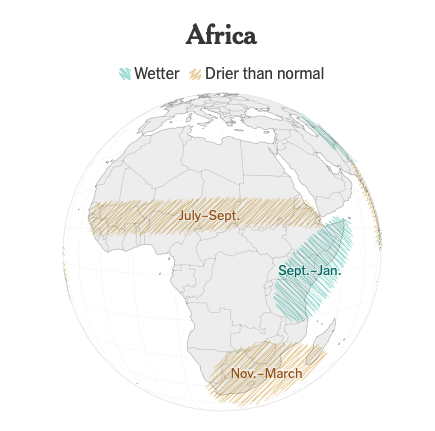
For Knysna, this does not automatically mean drought. The southern Cape does not respond to ENSO as directly as South Africa’s summer rainfall regions. But strong El Niño events have altered circulation patterns, rainfall distribution and the persistence of dry periods in this region in the past. More importantly, a very strong El Niño increases risk in systems that already have very little breathing room, like the one in Knysna.
Akkerkloof is critically important
The recent flood event showed exactly why the dam matters. During widespread electricity failures and operational disruptions at Charlesford, Akkerkloof effectively became the system’s emergency reserve. Storage rose temporarily during the heavy rainfall event, climbing from roughly 21.6% to 25.1%, but much of that gain disappeared within days as the system relied heavily on stored water while pumping infrastructure recovered.
By May 14, Akkerkloof had already fallen back to 22.5%. That trajectory tells an important story.
Despite one of the largest rainfall events seen in years, the system still struggled to convert the abundant water availability into storage recovery. The rivers were carrying extraordinary volumes of water during the storm, but operational disruptions limited the ability to fully utilise those river flows. Generator failures, abstraction interruptions, damaged monitoring systems and unstable pumping capacity became the major constraints.
In other words, the limiting factor was infrastructure reliability.
The coming winter matters
The next few months are likely the best opportunity Knysna will have to rebuild the dam's reserves before the higher-risk late 2026 period arrives. If Akkerkloof remains near current levels while river flows weaken later in the year, the system will be exposed to supply shocks, infrastructure failures and prolonged dry spells.
Here is the latest IRI Multi-Model Probability Forecast for precipitation for the period Spetember-October-November 2026:
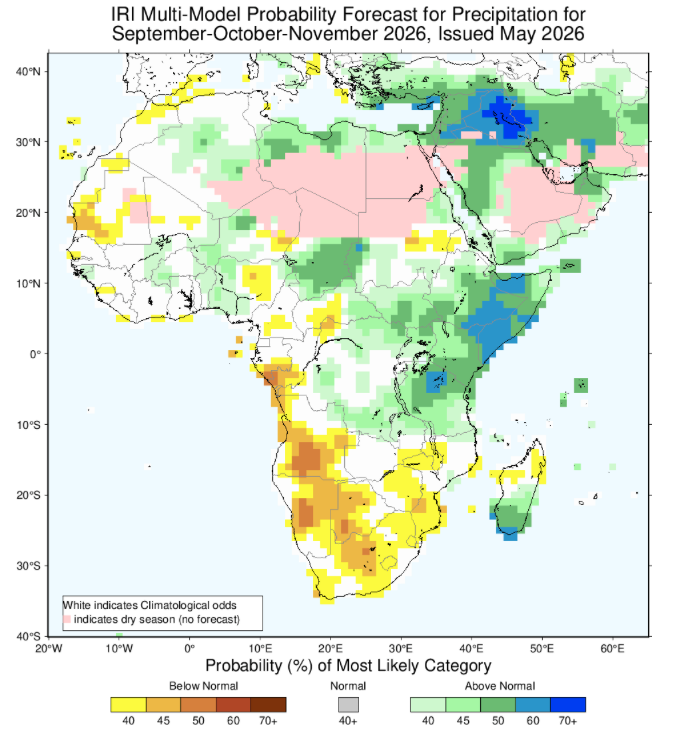
By the time we get to these months Akkerkloof should ideally be at capacity as the probability forecast shows below normal rainfall in areas surrounding Knysna.
It's not just about filling Akkerkloof of course.
The extreme precipitation event demonstrated that resilience depends on several interconnected systems functioning together:
- Reliable river abstraction at Charlesford
- Functional pumps and backup power
- The ability to transfer surplus water into storage
- Operational flexibility during extreme weather
- Monitoring systems that remain online during crises
The municipality’s ongoing pump refurbishment and groundwater work are all very important. These projects will help improve the system’s ability to manage water more effectively and maintain continuity during disruptive periods. But they do not remove the underlying dependence on healthy river flows and sufficient reserve storage.
Akkerkloof is central to the town's resilience story.
Given the very strong El Niño likelihood, this coming winter recharge season is likely to become one of the most important windows Knysna has had in years to rebuild storage before a more difficult climate phase emerges later in 2026 and early 2027.
Let's hope they do everything humanly possible to use every opportunity to increase Akkerkloof storage!