The UNEP released their flagship Emissions Gap Report 2025 this week.
In it they share this graphic showing the total net greenhouse gas emissions per gas, 1990-2024.

They correctly state:
Since atmospheric GHG concentrations drive global warming, these are ultimately the metrics that matter for meeting the temperature goal of the Paris Agreement.
As this is the metric, it is crystal clear that humanity, in 2024 has scored an F as the data shows that emissions increased by 2.3% between 2023 and 2024 (Compared to a 1.6% increase between 2022 and 2023.)
Looking at the data a little closer:
Fossil CO2 emissions account for approximately 69 per cent of current GHG emissions. These emissions are driven by the combustion of coal, oil and gas in the energy sector, as well as industrial processes associated with the manufacture of metals, cement and other materials.
Total emissions across all gases that are associated with fossil fuel extraction, production and combustion sectors were 42 GtCO2e in 2024, accounting for ~73 per cent of the total.
Given that the burning of coal, oil and methane gas is driving emissions, thus heating the planet and resulting in ever increasing climate chaos, what commitments have governments made in their Nationally Determined Contributions (NDCs) to stop doing this?
Here is the shocking reality check from the report:
To date no NDCs set targets to reduce oil and gas production or trim inefficient fossil fuel subsidies
In other words, despite the clear science, no governments anywhere have hit the brakes on fossil fuel production and usage. As a result, this report now officially states for the first time, it is no longer possible to remain below 1.5ºC. Of course anyone who has been tracking global temperatures will have told you this much some time ago.
The report then goes on to introduce the concept of "overshoot" and then returning back down to 1.5ºC. On this topic they state:
The fundamental ingredient for progress towards the temperature goal of the Paris Agreement remains unchanged: immediate and stringent emission reductions. Accelerated emission reductions require overcoming policy, governance, institutional and technical barriers; unparalleled increase in support to developing countries; and redesigning the international financial architecture. The new NDCs and current geopolitical situation do not provide promising signs that this will happen.
Where are we headed?
Here is the story:
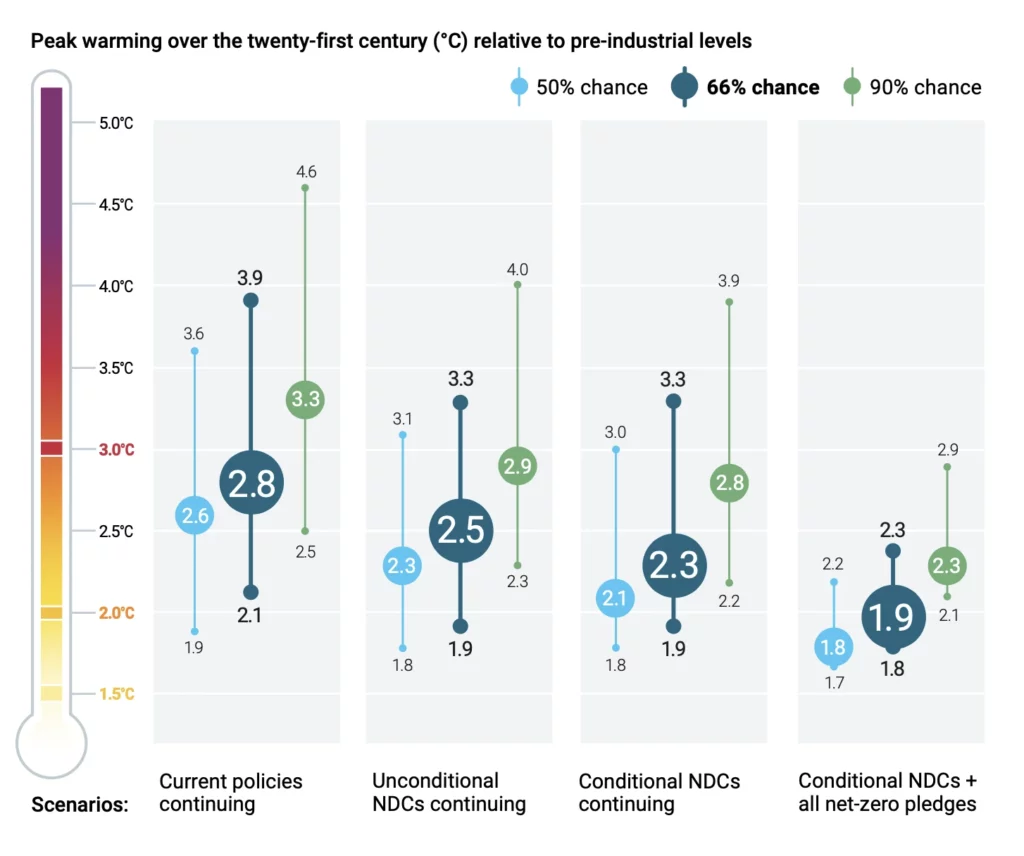
The only scenario in their assesment that keeps temperatures below 2ºC is the scenario they describe as the "most optimistic pledge-based scenario, which combines the full implementation of conditional NDCs and all net-zero pledges" which they acknowledge will be very difficult to achieve.
How difficult will it be to remain below 2ºC? The report breaks it down:
- A 25% reduction is needed for 2030 emissions to be aligned with 2°C pathways (Requiring an annual reduction in emissions of ~5.5% from 2026 to 2030)
- A 35% reduction is needed for a 2035 emissions to be aligned with 2ºC pathways (Requiring an annual reduction in emissions of ~4.2% from 2026 to 2025)
The only time we came remotely close to this kind of emissions reduction was during the early part of the COVID pandemic when emissions fell by 4.7% between 2019 and 2020. This is an enormous task.
Since there is no evidence that governments anywhere are attempting this kind of emissions reduction the report concludes:
A continuation of the mitigation effort implied by current policies is only enough to keep warming below 2.8°C
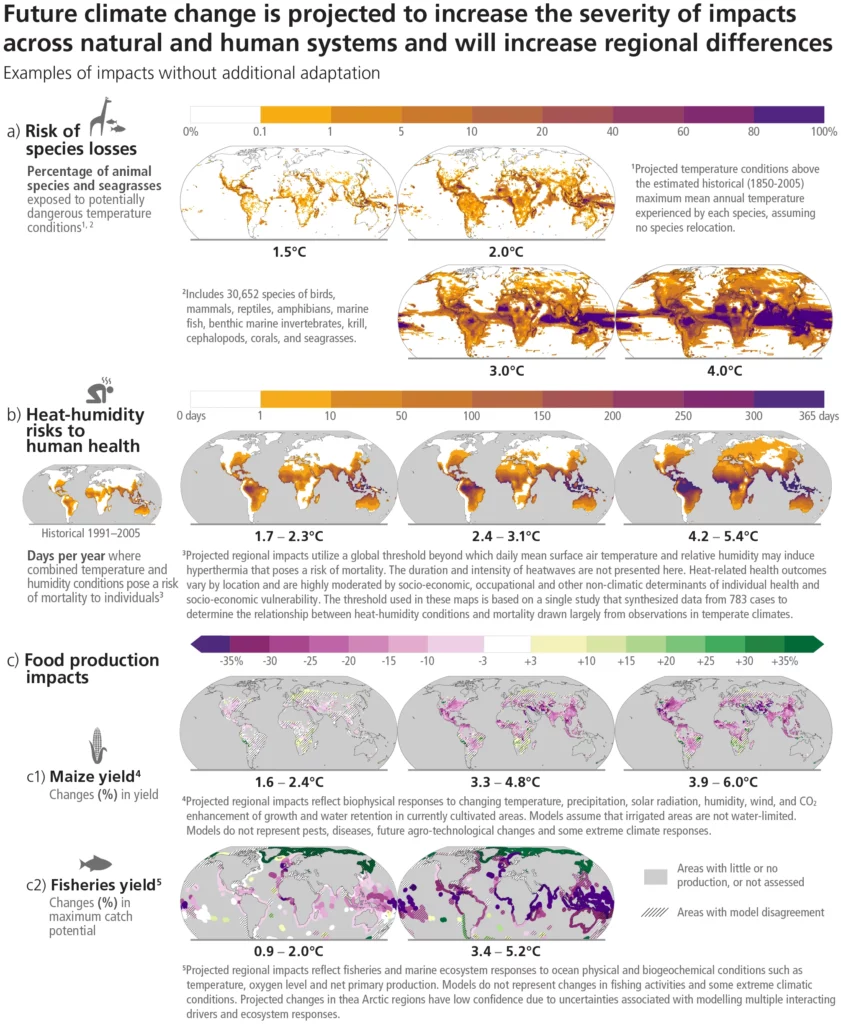
All this is to say that we are most certainly heading into a world that is 2ºC hotter than the preindustrial averages and for which we must now urgently prepare. The IPCC's reports have consistently outlined the risks as can be seen below.
Facing the consequences
The 2025 Emissions Gap Report leaves little room for interpretation: staying below 2°C is now almost impossible. With a 92% chance of crossing that and with global emissions still rising, the focus must shift from prevention alone to survival. Cutting emissions by 25% by 2030 —or 35% by 2035—is the minimum needed, yet it is something we have never achieved. The world must now confront what a ≥ 2°C future means in practical terms. Every country, city, and community will need resilience plans for food, water, health, and infrastructure. Mitigation remains essential of course and as this and every other major report on the climate crisis clearly outlines, every tenth of a degree that can be avoided matters, but adaptation is now equally urgent. The task ahead is not only to cut emissions; it is to ensure we can endure the climate we have already set in motion.