Our first real climatic shock seems to be coming into view.
I write this from my perspective on the southern tip of Africa. Your region of the world may be very different but it would be prudent to investigate what the impact will be where you live.
In September of 2022 Dr. James Hansen and colleagues published this brief report in which they shared these two graphs:
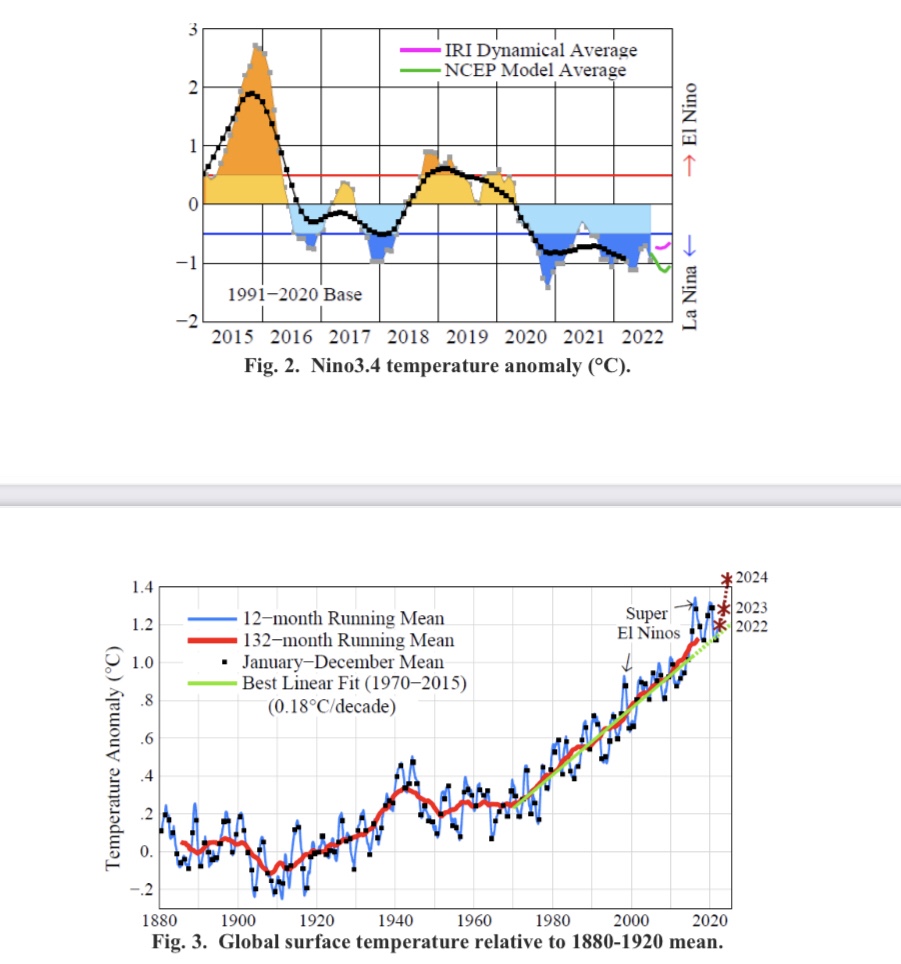
With this comment:
“We suggest that 2024 is likely to be off the chart as the warmest year on record. Without inside information, that would be a dangerous prediction, but we proffer it because it is unlikely that the current La Nina will continue a fourth year. Even a little futz of an El Nino – like the tropical warming in 2018-19, which barely qualified as an El Nino – should be sufficient for record global temperature. A classical, strong El Nino in 2023-24 could push global temperature to about +1.5°C relative to the 1880-1920 mean, which is our estimate of preindustrial temperature.”
As you can see from the above the 2015/16 El Niño event was described as a “Super El Niño” which is what is expected with coming event.
The Hansen et al projection was later corroborated by others. For example from the UK Met Office:
“The probability of having the first year at 1.5C in the next five-year period is now about 50:50.” — Prof Adam Scaife, Head of long-range prediction at the UK Met Office
From a South African perspective El Nino’s are periods accompanied by extreme heat and drought. In fact the 2015/16 event saw the driest period in 35 years. The impact of this brought the City of Cape Town very close to its water “Day Zero”

Day Zero is when Level 7 water restrictions would be implemented severely rationing water in the city.
On the Garden Route, the period following the El Niño saw South Africa’s worst fire disaster play out in Knysna in 2017:
This all transpired off the back of the 2015/16 El Niño and with surface temperatures at about 2°C above preindustrial averages in South Africa.

Now as we face the next El Niño in an even warmer world and a warmer South Africa we can expect a similar impact — except this time more extreme.
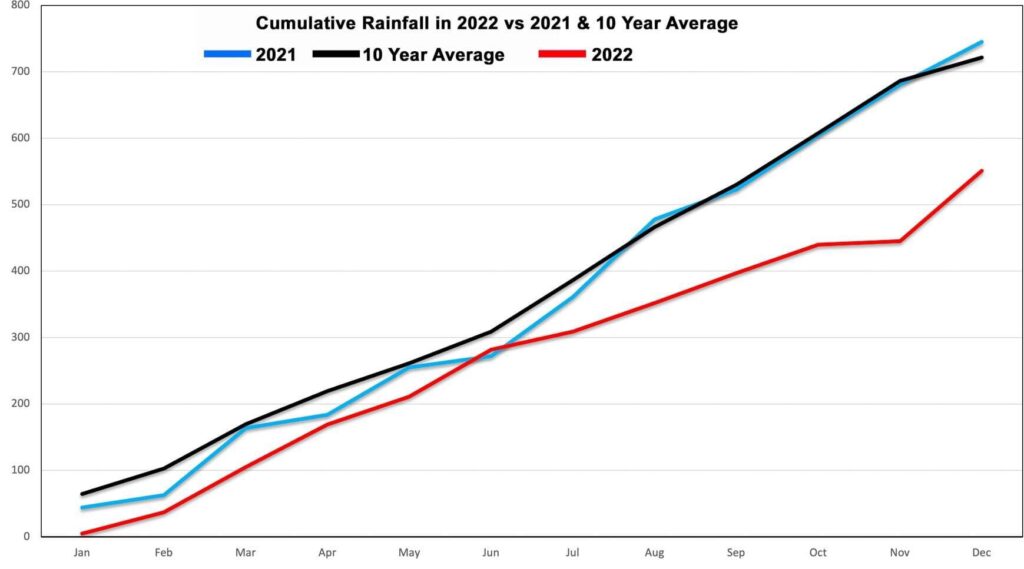
Already in 2022, during the current cooler La Niña period, this region had its share of water crisis. For example, in Gqeberha: ‘Day Zero’ water crisis looms on South Africa’s Eastern Cape and here in Knysna where Level 3 water restrictions are currently in place.
Knysna’s rainfall saw a sudden departure from the 10-year average from about June of 2022:
We need to brace for impact and prepare as best we can, as the period 2024-2026 is very likely to be South Africa’s first really big climatic shock — and there is nothing anyone can do about this as it is already baked into the system.
We are on the march towards a 1.5° and then a 2° world whether we like it or not.
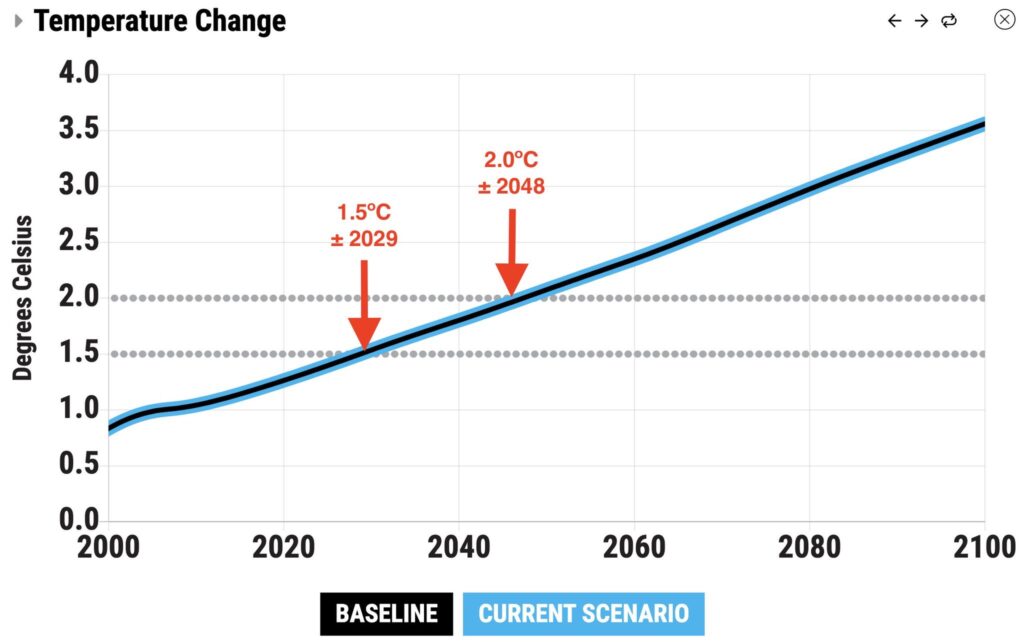
And it’s not like we have not been given advance warning: Supercomputer peers into SA’s climate future — and paints a frightening picture