As climate risks continue to escalate it is important to know that, solutions al ready exist to dramatically slow the emissions trajectory we are currently on and as a result reduce some of those risks.
Every Sunday, starting with this Sunday, this series will highlight practical technologies, policies and projects already being deployed around the world that, that can at scale, reduce heating, strengthen community resilience and improve everyone's life.
In this series I will use the broad policy framework of the En-ROADS climate simulator developed by Climate Interactive and MIT Sloan. The framework shows that there is no single solution to climate challenge. Instead, multiple solutions across energy, transport, industry, land use and greenhouse gas reduction all contribute to changing the global emissions trajectory.
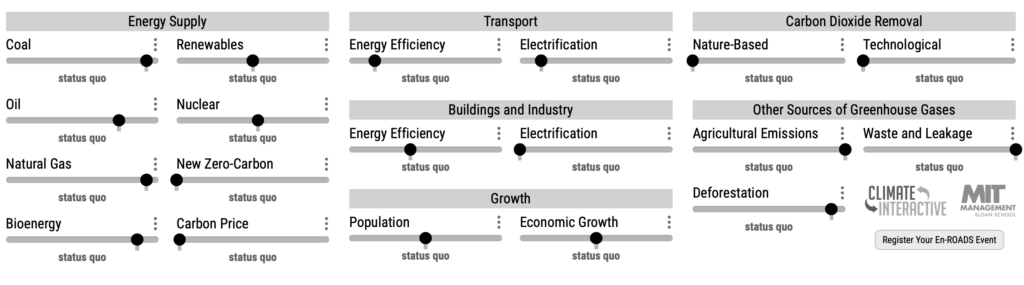
Each of these categories already contains real-world solutions that are being deployed today!
In this inaugural post, we look at coal power and the remarkable speed at which some countries are now phasing it out.
The problem
Coal is the single largest source of fossil CO2 emissions globally.

That makes coal one of the most important targets for emissions reductions. If coal use can be reduced rapidly, especially in electricity generation, the impact on global emissions can be enormous. And it can absolutely be done!
The UK provides one of the clearest examples anywhere in the world.
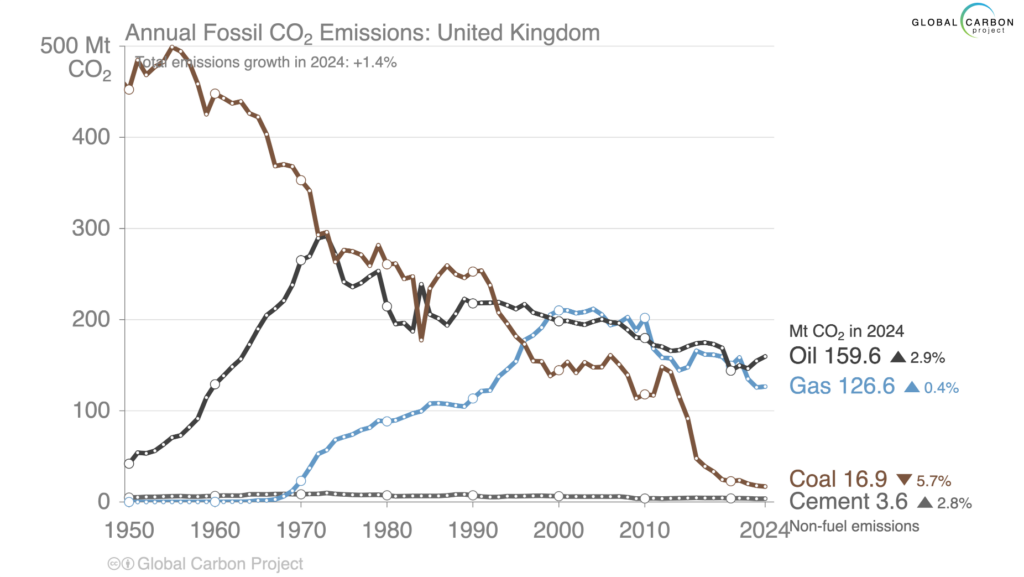
As recently as 2012, coal supplied nearly 40% of the UK’s electricity generation. By 2023, that figure had fallen to around 1% - remarkable! Then, on 1 October 2024, the UK officially became coal-free for electricity generation when Uniper’s Ratcliffe-on-Soar power station closed.
This graphic tells the story visually:
The UK solutions
Over roughly the same 12-year period in which coal generation collapsed, wind and solar generation increased dramatically and became central pillars of the UK grid.
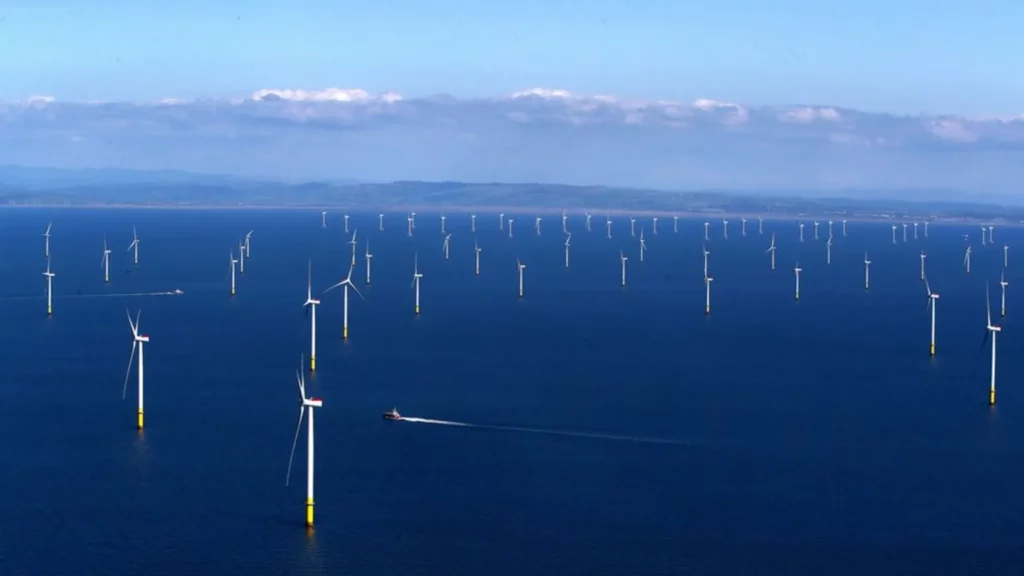

The UK is not alone however. Other countries like Denmark, Portugal, Spain, Greece and Chile have all rapidly reduced their coal use, and Germany and the US are also steadily moving away from coal power.
The lesson in all this is important. Advanced economies have now demonstrated that coal power can be phased out far faster than many assumed possible a decade ago.
Why it matters at scale
Using the En-ROADS simulator, a global coal phase-down similar to the trajectories now being seen in several countries produces a very large reduction in future CO2 emissions.
In this scenario, annual global CO2 emissions fall from roughly 47 GtCO2 in 2026 to around 33 GtCO2 by 2100, a reduction of about 14 GtCO2 relative to the baseline pathway!

That is an enormous number!
For comparison, 14 GtCO2 is larger than:
- the current annual emissions of China
- the combined emissions of the United States and India
- or the combined emissions of Europe, Japan and South Korea
Reducing coal use globally remains one of the biggest emissions levers available to us.
Limitations and challenges
Coal phase-outs are however not simple.
Many countries, like South Africa, still rely heavily on coal for affordable and reliable electricity, and replacing that capacity requires major investment in grids, storage, transmission and clean generation. Some regions also depend economically on coal mining and coal power jobs, making a just transition away from coal critical.
And while renewables are expanding rapidly, fossil fuel demand globally is still extremely high. Progress is real, but it isn’t happening fast enough globally yet.
Why speed matters
The science is increasingly clear that emissions reductions this decade are critical.
Recent indicators show that human-induced warming is now increasing at an unprecedented rate in the instrumental record, driven by very high greenhouse gas emissions and reductions in aerosol cooling.
The 2025 UN Emissions Gap Report notes that a:
25% reduction (range: 17–32) is needed for 2030 emissions to be aligned with 2°C pathways. In 2035 35% reductions are needed to align with 2ºC pathways.
There is no time to lose!
The technologies required to dramatically reduce coal use already exist. Wind, solar, storage, transmission expansion and electrification are all scaling rapidly.
The major challenge now is speed of deployment.