Our instruments are getting smarter and smarter and their data more and more accurate.
We ignore their data at our own peril.
For example here are what satellites can tell us about our changing climate:
Greenhouse Gases
- Satellites measure the global concentrations of atmospheric CO2 and methane, the primary drivers of human-caused climate change.
- Satellites can distinguish between natural and human sources of these gases and as a result support emissions reduction policies.
Cryosphere
- Satellites monitor the changes in the areas on Earth where water is frozen, such as polar ice sheets, glaciers, snow cover, sea ice and permafrost.
- Satellites track the shrinking, melting and thinning of these frozen regions and their impacts on sea level rise, albedo and biodiversity.
Oceans
- Satellites measure the sea surface temperature, sea level, ocean color, salinity and currents.
- Satellites detect the effects of climate change on the oceans, such as ocean acidification, coral bleaching, phytoplankton blooms and marine heatwaves.
Land
- Satellites observe the land surface temperature, vegetation cover, soil moisture, land use and land cover change.
- Satellites assess the impacts of climate change on the land, such as soil erosion, urban expansion, deforestation, desertification and droughts.
Atmosphere
- Satellites monitor the atmospheric temperature, pressure, humidity, clouds, aerosols and precipitation.
- Satellites study the changes in the atmosphere due to climate change, such as extreme weather events, air quality and ozone depletion.
The data pouring in from these instruments have got one clear message. We are headed in the wrong direction. We absolutely cannot say we didn’t know.
How much of the satellite data are you using to make different choices? Or do you look at this data an just toss it aside with a “Yeah, whatever!”
The chips are down. What will you do?
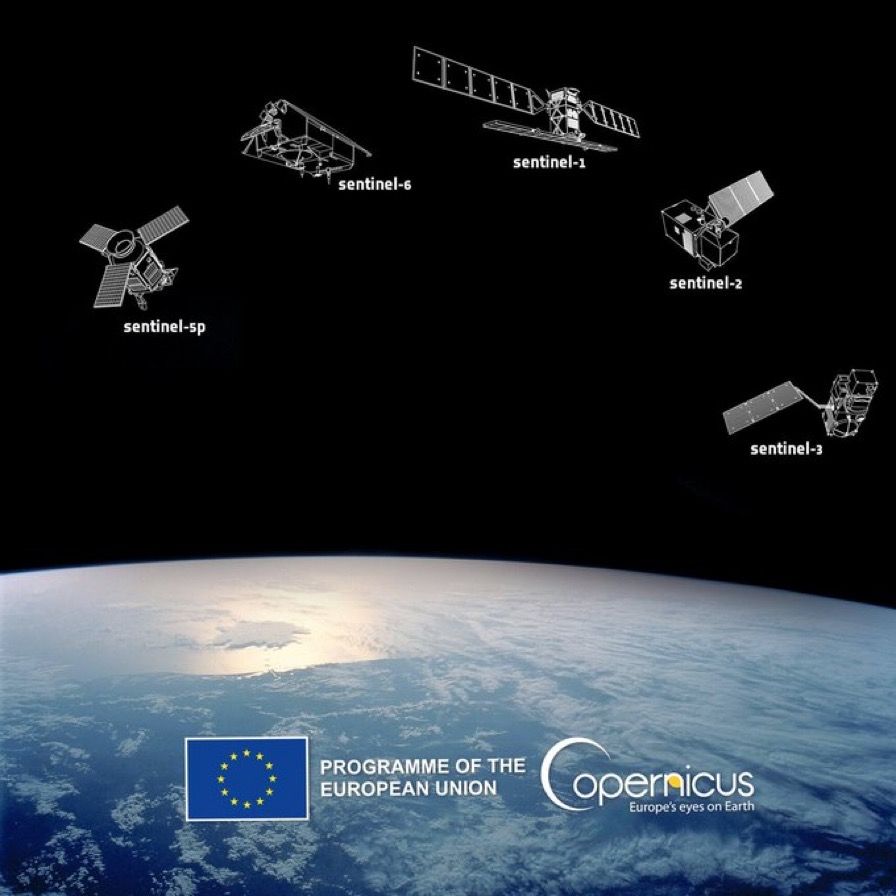
(Pictured current array of Sentinel satellites from Copernicus, the Earth Observation arm of the EU Space Programme)