We have know for decades what is driving human caused greenhouse gas emissions, as you can see below:

In our Solutions Sunday series so far, we have seen that we have the solutions to knock out the coal and oil emission pillars. But what about methane gas, often referred to as "natural" gas by the fossil fuel industry, a term meant to disguise the serious impacts on emissions and global heating.
Methane gas - the facts
Because of the use of the term "natural gas" many people do not know that methane gas is a potent greenhouse gas. It is about 86 times more powerful than CO2 over 20 years and 34 times more powerful over 100 years at trapping heat in the atmosphere! This explains why methane, in the short-term is responsible for about 30% of the global heating we are currently experiencing. As such, reducing methane emissions is the fastest way to slow near-term global temperature rise.
This is why in November 2021, at the COP conference in Glasgow, 159 countries signed the Global Methane Pledge to reduce methane emissions by 30% by 2030.
Besides the global heating contribution burning methane gas releases NOx, CO2 and fine particulates (PM2.5) which cause respiratory diseases, heart disease and premature deaths. Research has found, for example, that gas stoves in homes emit NOx at levels that are linked to childhood asthma.
Clearly we need to eliminate this fossil fuel energy source, not just to reduce global heating but to improve peoples health!
The Solution
We need to understand which sectors are responsible for the most methane gas usage.
- It is widely used for power generation in gas turbines and steam generators. In recent months it is alarmingly being used extensively for electricity generation to power AI data centers.
- It is also extensively used for heating and cooking in the residential sector.
We know that renewables plus storage (batteries & pumped hydro) can fully replace gas-fired power plants, especially as grid-scale storage improves. Two great examples of this are in Spain and Portugal that have achieved periods where renewable (mainly wind and hydro) have met 100% of electricity demand, clearly demonstrating grid stability without the need for methane gas!
What about in the residential sector? Here Norway stands head and shoulders above the rest, where 60-66% of all homes have heat pumps installed, resulting in a remarkable 83% reduction in CO2 emissions from domestic heating since their introduction!
Here you can see the reduction in methane gas usage from these three countries.

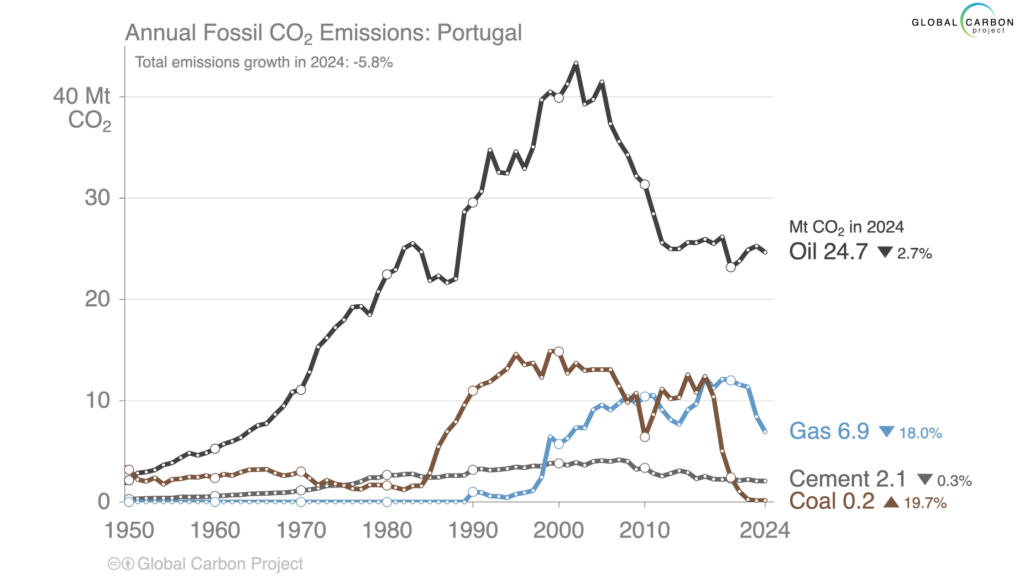
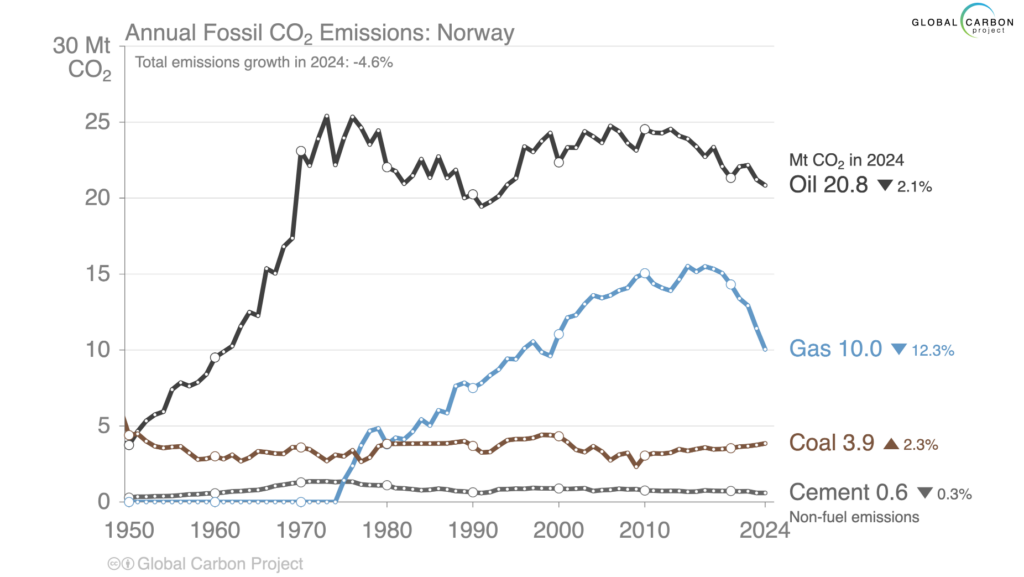
Look what happens to CO2 emissions when we use the solutions we already have to radically reduce our use of coal, oil and gas:

We have the solutions we just need to use them!