In a nutshell, energy efficiency means using less energy to perform the same task or achieve the same result. It is the practice of eliminating energy waste while maintaining the same level of performance, comfort, or convenience.
A major study by Rao et al entitled Energy requirements for decent living in India, Brazil and South Africa cast light on how much energy is required for a decent living standard, which includes material requirements for shelter, nutrition, hygiene, health, education, communication, and mobility.
They found that the energy requirement for a decent living standard was between 20–50 GJ cap–1 yr –1. Using this measure they looked at energy use across the globe and here is what the results showed:
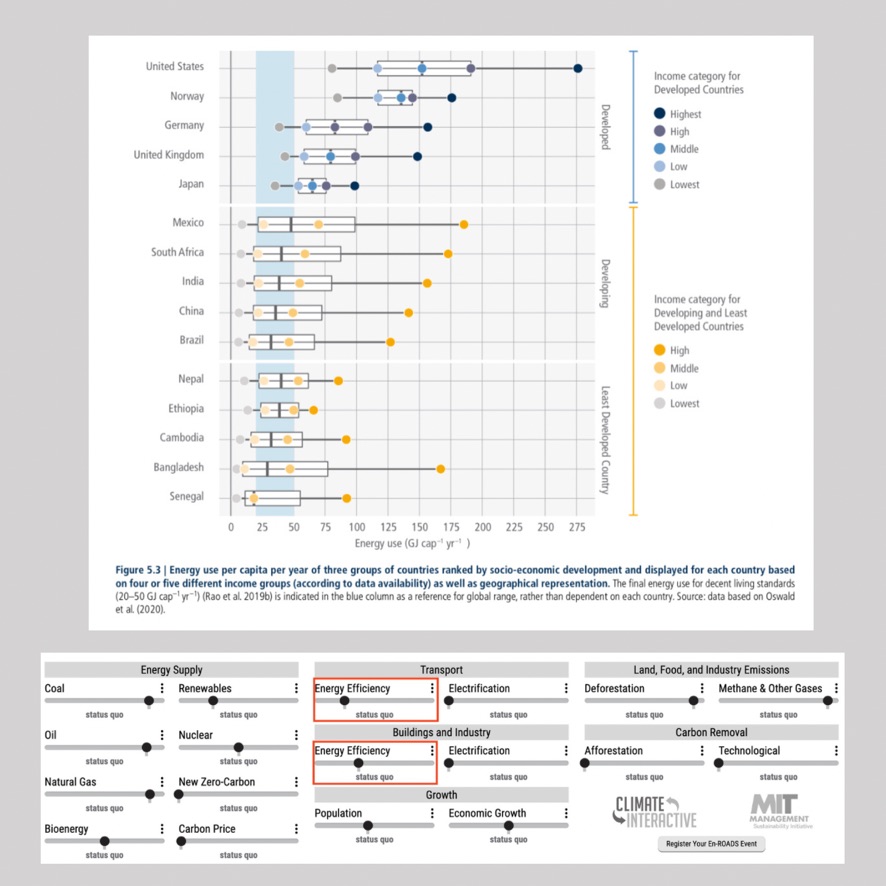
As you can see, in almost all countries, high and middle income individuals use way more energy than is required for a decent living standard which is shown as the blue bar in the chart above. I have also included the policy levers from the En-ROADS climate simulator to show where energy efficiency matters most.
Because the high and middle class are the most energy inefficient and they have more access to more funds, they can make a big difference to their personal emissions without sacrificing a decent living standard by making different consumption choices.
In a research paper entitled Quantifying the potential for climate change mitigation of consumption options Ivanova et al quantified which consumption choices could have the largest impact on individual emissions. Here are the top 10 from this paper showing the mitigation potential in tCO2e/capita for each choice.
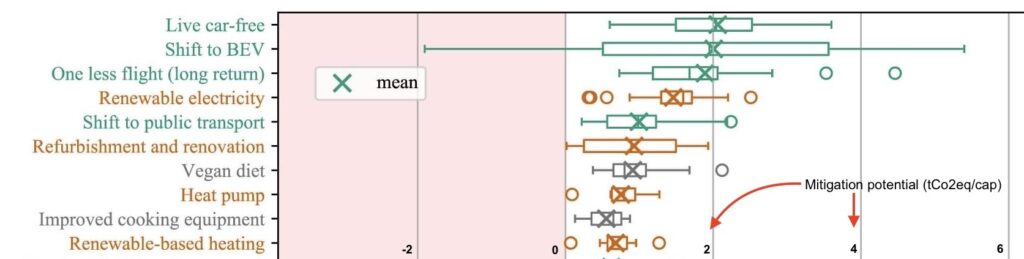
As you can see from the list, 4 of the top 5 choices relate to transport choices. To top 2 being related to car ownership. In many cities in the world it is absolutely possible to live car-free and many people already do, opting instead to use public transport, cycling and walking for their mobility. Where a car is necessary, switching to an electric vehicle will make a massive difference to an individual's emissions.
Fortunately these vehicles are now becoming cheaper so more individuals who need a car for mobility can afford one.
Also at the top of the list is flying less and using renewable electricity in the home, made possible by solar technology.
How many of these top 10 items could you and your family take action on?
Taking a closer look at transportation efficiency
Recently the IEA published a 10-point plan to reduce oil consumption in the transport sector. Take a look at each of the 10 points.

It is absolutely clear that especially those with means, who globally are consuming more energy than is needed for a decent living standard, can make different choices that will dramatically impact global emissions.
We can now see a picture emerging from our Solutions Sunday series. No one action will get us to where we need to be. It is going to take actions and policies across sectors to get us there.
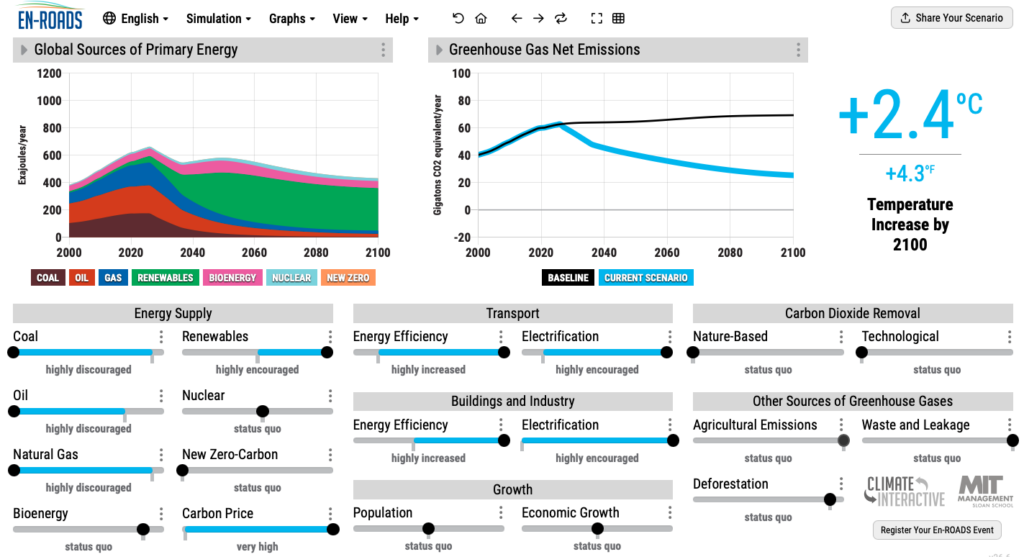
When we reduce our use of coal, oil and methane gas, price carbon, boost the use of renewable energy, electrify our transport and buildings and practice energy efficiency we can bend the emissions curve and thus where global temperatures end up.
In the example below, with these actions and policies in place we could bring temperatures down from 3.3ºC to 2.4ºC.
That is progress!
But 2.4ºC is still dangerously high! In the next editions of this series we will look at the solutions that are available in agriculture, forestation, and what we can do about waste and leakage to bring emissions down even further.
We have the solutions we just need to use them!